Mind Over Machine: What Richthofen's Personal Letters Reveal About the Mental Game of Aerial Combat
Everybody knows the Red Baron as a number — 80 confirmed aerial victories, the highest tally of any fighter pilot in World War I. But numbers don't tell you how a man thinks. For that, you have to dig into the letters.
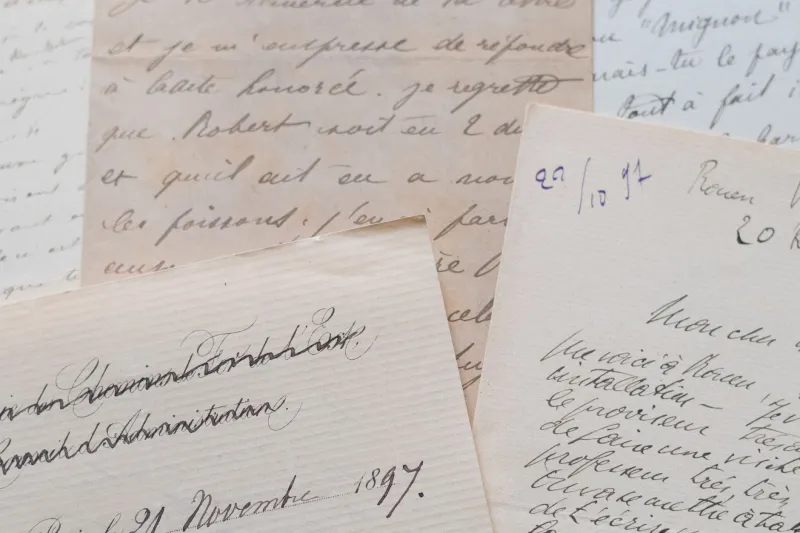
Manfred von Richthofen wrote home constantly. To his mother, Kunigunde. To his father, Albrecht. To his brother Lothar, himself a decorated ace. These weren't the polished dispatches of a man curating a public image. They were real-time dispatches from one of the most psychologically demanding environments a human being has ever occupied — the skies above the Western Front.
And if you read them carefully, a very different portrait of the Red Baron emerges.
The Calm That Wasn't Accidental
One of the most striking things about Richthofen's personal correspondence is how measured it sounds. Even during the bloodiest stretches of his career, his letters home rarely betray panic or existential dread. That might seem like emotional suppression — a soldier bottling things up. But sports psychologists who have studied high-performance athletes under stress recognize something else going on: deliberate compartmentalization.
Richthofen appeared to draw a hard line between the cockpit version of himself and the person writing home to his family. In letters from 1917, he describes hunting trips he hoped to take after the war, asks about the family dogs, and checks in on the health of relatives with genuine warmth. He wasn't escaping into fantasy. He was actively maintaining an identity outside the killing.
That's a technique modern performance psychologists call "role separation," and elite military units in the U.S. spend real training time teaching it. The idea is simple but hard to execute: the person you are at work and the person you are at home can't bleed into each other, or both versions suffer. Richthofen seemed to understand this intuitively, decades before the science caught up.
Letters as a Grounding Mechanism
There's also something worth noting about the act of writing itself. Richthofen was prolific with correspondence during a period when many pilots — especially those with high kill counts — were burning out fast. The psychological toll of aerial combat in WWI was staggering. Pilots flew multiple sorties a day, watched friends die in flames, and were expected to return to the mess for dinner like nothing happened.
Writing letters gave Richthofen a structured outlet. Research in cognitive behavioral therapy has long supported expressive writing as a way to process high-stress experiences without being overwhelmed by them. Whether Richthofen knew the theory is irrelevant — he was living the practice. His letters home functioned as a running emotional ledger, a way to stay tethered to something real when the world above the clouds was anything but.
For American military families who've watched loved ones deploy and return changed, this resonates on a gut level. The ritual of correspondence — even in the era of email and video calls — still carries that same anchoring function.
The Family Factor
Richthofen's relationship with his family wasn't just emotionally sustaining. It was structurally important to how he operated. His brother Lothar flew under him in Jagdgeschwader 1, which created a dynamic that's fascinating to unpack. Manfred frequently expressed concern for Lothar's safety in ways he never seemed to apply to himself. Having someone to protect — someone whose survival felt personally meaningful — gave him a mission that extended beyond his own ambition.
This tracks with what modern military psychologists describe as "purpose anchoring." Soldiers and pilots who fight for something specific — a person, a community, a concrete idea — tend to demonstrate more consistent performance under stress than those motivated purely by abstract duty or personal glory. Richthofen had both the abstract (duty to Germany) and the personal (his brother, his family name, his mother's letters in his breast pocket). That combination is a psychological edge most of his opponents simply didn't have.
What the Letters Don't Say
Here's where it gets interesting: Richthofen's letters are also notable for what they leave out. He rarely dwells on the men he killed. He acknowledges victories almost clinically, often in the same breath as a comment about the weather or a request for a package from home. Some historians have read this as coldness — evidence of a desensitized killer. But that interpretation misses the psychological sophistication at work.
Elite performers in high-stakes fields — surgeons, special operations soldiers, professional athletes — often describe a similar pattern. Lingering too long on outcomes, whether wins or losses, disrupts the forward focus required for consistent performance. Richthofen's letters suggest he understood, consciously or not, that emotional accounting had its place but that the cockpit wasn't it.
U.S. Air Force mental performance programs teach something almost identical today. You debrief. You process. Then you move forward. Richthofen seemed to do his processing in letters home and then genuinely leave the weight on the page.
The Resilience Nobody Talks About
In July 1917, Richthofen took a bullet to the head during combat. He survived, but the wound was serious — he suffered partial blindness, severe headaches, and neurological symptoms for months. His letters during recovery are some of the most revealing he ever wrote. There's frustration, yes. But there's also a methodical, almost clinical focus on getting back to flying. He tracks his own recovery the way a professional athlete tracks rehab, with an eye on return-to-performance rather than dwelling on the injury itself.
That orientation — forward-looking, process-focused, resistant to victimhood — is something mental performance coaches in the U.S. spend years trying to instill in high-level competitors. Richthofen had it baked in, and his letters home during that period read almost like a field guide on bouncing back from setbacks.
What We Can Take From All This
For the Red Baron Flyers community, this stuff matters because it deepens the legend without cheapening it. Richthofen wasn't just a killing machine in a red airplane. He was a psychologically complex human being who happened to be extraordinarily good at one of the most terrifying jobs in human history — and who kept himself functional through a combination of family connection, emotional discipline, and a relentless forward focus.
The letters don't make him a saint. They make him real. And real, it turns out, is a lot more interesting than mythological.
Whether you're a collector, a history buff, or someone who's just always been drawn to the legend of the Red Baron, the personal correspondence is worth seeking out. English translations of many of his letters are available through WWI historical archives and several published collections. Read them once and you'll never see the scarlet triplane quite the same way again.