From Dogfights to Deal Flow: The Unexpected Ways Richthofen's Legacy Fuels American Business Thinking
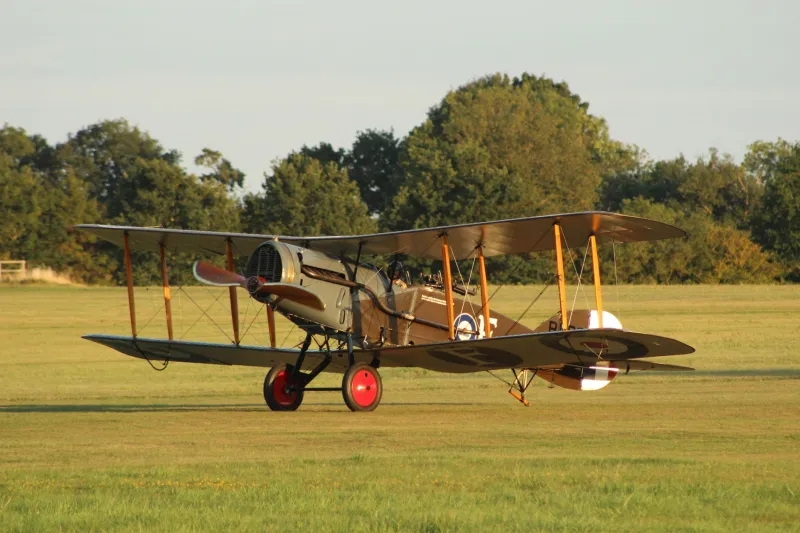
You wouldn't expect a German flying ace from World War I to show up in a Silicon Valley pitch meeting. But spend enough time around startup founders, venture capitalists, and competitive strategists, and you'll start noticing a pattern. The Red Baron — Manfred von Richthofen, 80 confirmed kills, the most feared pilot of the Great War — keeps getting name-dropped in places where nobody's talking about airplanes.
This isn't the same as slapping a famous quote on a motivational poster. The people drawing from Richthofen's legacy are doing something more specific, and honestly, more interesting. They're studying how he operated — his decision architecture, his psychological toolkit, his almost ruthless commitment to efficiency — and reverse-engineering it for markets, not skies.
Precision as a Business Philosophy
Richthofen didn't rack up 80 victories by being the most daring pilot in the sky. He was arguably the most deliberate. He picked his engagements carefully, refused to fight on unfavorable terms, and almost never wasted ammunition. Historians have noted that he approached each mission less like a duel and more like a surgical procedure.
For a certain kind of American entrepreneur — particularly those coming out of engineering or quantitative finance backgrounds — that framing resonates hard. The parallels to capital allocation are almost uncomfortably direct. You don't take every deal. You don't fight every competitor. You position yourself for engagements where the odds already tilt your way, then execute with minimum friction.
Business historians who study the intersection of military history and corporate culture point out that Richthofen's approach anticipated what modern strategists call "asymmetric competition" — finding situations where your specific strengths create a structural advantage, rather than grinding it out in a fair fight. That's not just a nice idea. In venture-backed startup culture, it's practically doctrine.
The Psychology of the Red Plane
Here's a detail that doesn't always make it into the history books but gets a lot of traction in branding conversations: Richthofen painted his Fokker triplane bright red. Entirely on purpose. In a sky full of camouflaged aircraft, he wanted to be seen.
The conventional read is that this was ego. The deeper read — and the one that tends to get business people excited — is that it was a calculated psychological weapon. Enemy pilots who spotted that red plane felt a specific kind of dread. His reputation preceded him so completely that the color itself did work before a single shot was fired. He had, in modern marketing terms, built a brand so powerful it functioned as a force multiplier.
American companies have explicitly cited this dynamic when explaining their own bold visual identities and aggressive brand positioning. The logic isn't subtle: in a crowded market, invisibility is a liability. Standing out costs something — it invites scrutiny, invites challengers — but it also commands attention and shapes perception before a competitor even engages. Richthofen understood that psychological real estate was as valuable as tactical position.
Calculated Risk-Taking vs. Recklessness
One of the more nuanced things that serious students of Richthofen's career bring up is the distinction between the risks he took and the risks he refused. He wasn't fearless in the romantic sense. He was disciplined. He tracked his own near-misses, analyzed what went wrong, and adjusted. He was wounded in combat and came back more cautious, not less skilled.
In startup culture, there's a persistent myth that great founders are simply high-risk-tolerance people who bet big and don't look back. The data doesn't really support that, and neither does Richthofen's actual biography. What he modeled was something closer to what behavioral economists now call "calibrated confidence" — knowing the difference between a risk you've genuinely assessed and one you're just rationalizing because you want the outcome.
For founders navigating early-stage decisions — when to raise, when to pivot, when to walk away from a market — that distinction matters enormously. Several business school case studies have started incorporating WWI aerial combat as a framework for exactly this kind of risk literacy, and Richthofen's career tends to anchor the discussion.
The Jasta Model and Team Dynamics
Richthofen didn't fly alone. He commanded Jagdstaffel 11 — Jasta 11 — and later the larger formation known as the Flying Circus. His leadership approach was notable for the era: he recruited aggressively, mentored younger pilots personally, and created a culture of shared learning where combat insights circulated quickly through the group.
Sound familiar? It should. The structure maps almost directly onto what high-performing tech teams and VC-backed growth companies describe as their operating model. Flat enough for information to flow fast, structured enough for clear accountability, led by someone whose own competence is visible and not just administrative.
Organizational psychologists who study high-performance teams have pointed to the Flying Circus as an early example of what's now called a "learning organization" — a group that systematically captures and distributes operational knowledge rather than hoarding it at the top. Richthofen built that before the concept had a name.
Why This Keeps Showing Up in American Culture Specifically
It's worth asking why American business culture, in particular, keeps returning to this specific figure. There are plenty of military commanders from history to draw on. Something about Richthofen's story hits differently here.
Part of it is the mythology — the Red Baron has been part of American pop culture since at least the 1950s, from Snoopy's comic strip nemesis to frozen pizza branding. He's already embedded in the cultural shorthand. But there's also something about the type of excellence he represented that fits the American entrepreneurial self-image: individual skill, competitive dominance, a certain theatrical flair combined with genuine technical mastery.
He wasn't a general moving pieces on a map. He was in the cockpit, doing the thing himself, and being the best at it. That's a narrative American startup culture finds deeply appealing.
What the Red Baron Actually Teaches
Strip away the romance and what you're left with is a remarkably coherent operating philosophy: know your strengths and fight on those terms, make your presence felt before the engagement starts, learn faster than your competition, and build a team that multiplies your capabilities rather than just executing your orders.
None of that is magic. All of it is hard. But it's also why, more than a hundred years after his last flight, Manfred von Richthofen keeps showing up in rooms where people are trying to figure out how to win.
At Red Baron Flyers, we've always known the legend runs deeper than the history books. Turns out the boardrooms knew it too.