Crash Course: How the Red Baron's Worst Moments Quietly Revolutionized Aviation Safety
Everybody loves a victory lap. When we talk about Manfred von Richthofen around here, it's usually about the 80 kills, the crimson Fokker triplane, the sheer audacity of the man's flying career. And look, that stuff is genuinely incredible. But there's another side to the Red Baron's legacy that doesn't get nearly enough airtime — pun fully intended.
Some of the most durable contributions Richthofen made to the world of aviation had nothing to do with his wins. They came from his mistakes. His close calls. His near-disasters. And, ultimately, the circumstances of his death. If you want to understand how a World War I ace helped shape the safety culture behind everything from U.S. Air Force pilot training to FAA protocols, you have to be willing to look at the moments when the Baron got it very, very wrong.
The July 1917 Head Wound: A Lesson in Pilot Incapacitation
Most Red Baron fans know that Richthofen took a bullet to the head on July 6, 1917, during a dogfight over Polygon Wood in Belgium. What's less discussed is what happened after — and why it matters so much to aviation medicine.
Richthofen didn't lose consciousness immediately. He managed to land his aircraft, but the landing itself was rough and disoriented. He survived, recovered, and returned to flying — but the incident left military aviation officials deeply unsettled. Here was the most celebrated pilot in the world, temporarily blinded and partially incapacitated at the controls, somehow getting a plane on the ground without killing himself or anyone else.
The takeaway wasn't "wow, what a tough guy." It was a sobering question: what systems exist to handle a suddenly incapacitated pilot? The answer in 1917 was basically nothing. That gap became a driving concern in early aviation safety research, eventually contributing to the development of dual-control systems, crew resource management frameworks, and, much later, the modern protocols U.S. commercial airlines use when a pilot experiences a medical emergency mid-flight. The Red Baron's brush with death planted a seed that took decades to fully grow.
Chasing Too Low: The Danger of Altitude Abandonment
One of Richthofen's most consistently documented tactical errors — noted by both Allied intelligence officers and German aviation historians — was his occasional habit of pursuing enemy aircraft below what was considered a safe operational altitude. His aggression was legendary, but it sometimes caused him to descend into territory where ground fire became a serious threat and maneuverability was severely compromised.
This wasn't unique to Richthofen. It was a widespread problem among aces of his era, sometimes called "target fixation" in modern parlance. But because Richthofen was so meticulously documented — his flights were logged, his tactics analyzed by both sides — his altitude missteps became some of the clearest early case studies in what we now call controlled flight into terrain (CFIT) risk.
U.S. military aviation, particularly after World War II, used historical case studies like Richthofen's low-altitude pursuits as foundational examples when building out situational awareness training. Today, target fixation and CFIT are central modules in American military pilot education. The next time a U.S. Navy aviator gets a simulator warning for dropping too low during a pursuit scenario, there's a direct — if winding — historical line back to the Red Baron's aggressive descents over the Western Front.
The Fatal Sortie: What April 21, 1918 Keeps Teaching Us
This is the big one. The circumstances surrounding Richthofen's death on April 21, 1918, remain one of aviation history's most debated mysteries. Whether the fatal shot came from Canadian pilot Roy Brown's Sopwith Camel or from Australian ground forces below is still argued in aviation circles. But the why of what Richthofen was doing in that moment is arguably more instructive than the who.
By multiple accounts, Richthofen had violated several of his own tactical rules on that final flight. He was flying low. He was in unfamiliar airspace. He was pursuing a relatively inexperienced pilot — Lieutenant Wilfrid May — with a persistence that pulled him dangerously out of position. He had also reportedly been showing signs of mental and physical fatigue in the weeks prior, something his commanding officers had noted with concern.
For modern aviation safety researchers, this reads like a textbook case of what the FAA and military training programs now call "cumulative risk" — the dangerous compounding of multiple smaller risk factors that individually seem manageable but together create catastrophic vulnerability. Fatigue plus unfamiliar airspace plus low altitude plus distraction equals disaster. Richthofen's final flight is, in a grim way, one of the clearest historical illustrations of why modern pre-flight risk assessment checklists exist.
The U.S. military began formalizing fatigue management protocols for pilots in earnest after World War II, and the pattern of errors visible in Richthofen's final sortie — well-documented by aviation historians on both sides — helped inform what those early frameworks looked like.
Learning More from Losses Than Victories
There's a broader point here that goes beyond Richthofen specifically, but he's the perfect case study for it. Aviation safety as a discipline is fundamentally built on failure analysis. The field advances not because everything goes right, but because when things go wrong, someone takes meticulous notes.
Richthofen was one of the most documented pilots of his era. Both the German military and Allied intelligence services tracked his movements, his tactics, his health, and his errors with unusual thoroughness. That documentation, which survived the war and became available to researchers, gave 20th-century aviation safety pioneers a remarkably detailed window into how even elite pilots fail.
In the U.S., the National Transportation Safety Board's entire methodology — studying accidents and near-misses to prevent future tragedies — is philosophically rooted in the same logic. You learn more from what went wrong than from what went right. Richthofen's victories were inspiring. His mistakes were instructive.
The Baron's Unintentional Gift to Modern Flyers
It feels a little strange to frame it this way, but Manfred von Richthofen's legacy in aviation safety is real and surprisingly far-reaching. His head wound helped spark conversations about pilot incapacitation. His aggressive low-altitude tactics became early case studies in target fixation. His final flight is a near-perfect illustration of cumulative risk in action.
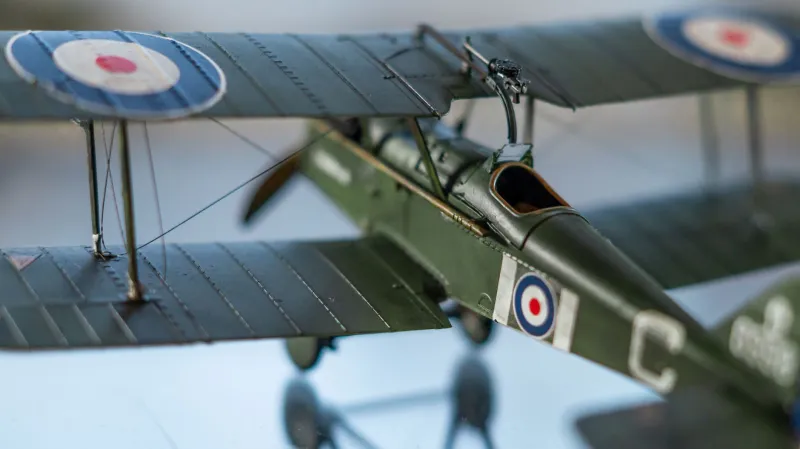
None of this was intentional, obviously. The Red Baron wasn't trying to leave safety researchers a gift. He was trying to win a war. But history has a way of finding meaning in unexpected places, and for those of us who love aviation — whether we're obsessing over WWI history, collecting Fokker triplane models, or just geeking out over the mechanics of aerial combat — there's something genuinely moving about the idea that even the Baron's worst days contributed something lasting to the world of flight.
Next time you board a commercial flight and the crew runs through their safety checklist, or you read about a military pilot completing a fatigue assessment before a mission, take a second to appreciate the long, complicated chain of human experience that made those protocols possible. Somewhere in that chain, a red airplane is banking hard over the Western Front — and a century of lessons are beginning to take shape.